Region
Mâconnais
Appellation
Pouilly-Fuissé 1er Cru "Les Perrières"
Grape variety
Chardonnay
Situation
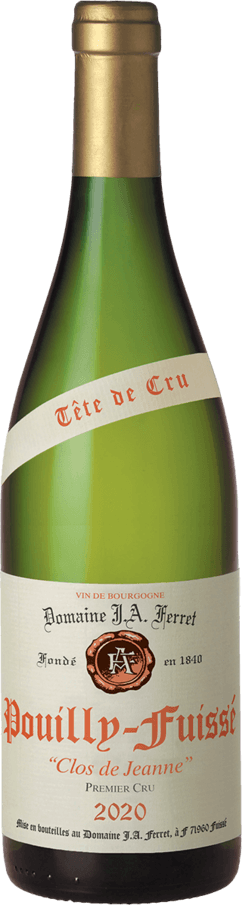
Le Clos de Jeanne is a gently sloping single parcel that faces East. It is located between the house of Domaine Ferret and the village church. This vineyard, the smallest among those that produce the Têtes de Cru and Hors Classe cuvées, covers 0.64 hectares in the backyard of the domaine.
Since 2020 vintage and the Premiers Crus arrival in our appellation, this wine, situated in the heart of 1er Cru "Les Perrières", change his name in honor of Jeanne Ferret's mind. The plot is still the same.
Age of the vines
Half the vines just reach 35 years old, while the rest just turn their 50th birthday.
Soil
These deep sandy loams are derived from sedimentary clays and don't contain any stony material. The bedrock features seams of limestone and marl-limestone.
Vinification
Fermentation and ageing take place in oak barrels with 25% of new oak, 75% of 1 to 3-year-old barrels for 10 months. Then the ageing continued in stainless steel tank with all their lees for another 9 months. Bottled in April 2025.
Tasting
With its round and charming nature, « Clos de Jeanne » 2023 remains faithful to its terroir. Greedy and intense, it is also full of freshness with its notes of zest and its mineral finish.
Vintage
Once again, the 2023 vintage in the Mâconnais kicked off with a winter and spring that were both warmer and drier than the average, and this followed on from an end to the growing season in 2022 that was notably deficient in rainfall. We will easily forget the exceptionally dry conditions in February, which only delivered 2mm of rain.
Abundant spring showers in March and the mild conditions that prevailed in spring precipitated a relatively early budbreak which was, thankfully, spared from frost. Flowering, which took place in May, was perfectly homogenous, and this led to the development of well-formed bunches. June, on the other hand, was notable for the way it alternated between thunderstorms, some of them violent, and periods of hot, dry weather, leading to some hail damage and which allowed for attacks by downy mildew, which set in across the region. In contrast to the northern part of Burgundy, the south saw levels of rainfall in June that were almost twice the norm. July brought summery weather, encouraging the bunches to close up and veraison to begin, even though powdery mildew was making its presence felt in the vineyards. The hard work of our vineyard teams meant that we managed to preserve the health of our grapes, and we headed into the harvest season with perfectly healthy grapes.
Just as we thought we were heading for another early harvest, a wave of cool weather set in during the last week of August, creating a cessation of hostilities and allowing the vines some respite as they emerged from a week of heatwave.
On the 3rd of September, we were hit with another, unexpected spike in temperatures - a historic first at this time of year. This late heatwave only came to an end a fortnight later. The following day our picking team set off on a race against time, aiming to preserve as much freshness as possible in our lovely grapes. We picked our parcel selections first, and only in the mornings, in order to benefit from the relatively cool conditions. On the 16th of September, after 11 days of hard work under the blazing sun, our team made their last cuts of the secateur while admiring the spectacular panorama they could see from the vineyards of the Vergisson Rock.
The generosity of the yields, a key factor in creating balance, has allowed us to retain freshness in the finished wines, despite the warm vintage. With the benefit of very gentle pressing, we have made wines that show great purity of fruit, as well as density, complexity and vibrancy.